 Tessuto filtrante Bolian
In the push for “ultra-low emissions,” dust filter bags play a critical role in steel production. Processes such as sintering, pelletizing, and converters generate high-temperature, high-humidity, and corrosive flue gas, placing strict demands on filter bag performance. So how does dust filtration technology handle these challenges and ensure stable, compliant emissions?
Challenge 1: High-Temperature Resistance
Steel flue gas fluctuates greatly in temperature, with peaks exceeding 260°C—far beyond the limits of conventional filter materials.
Solutions:
High-temperature-resistant fibers: Instead of polyester, advanced fibers such as PPS, P84, and PTFE are preferred. PPS offers good cost-performance and chemical resistance; P84 provides excellent heat resistance; and PTFE can operate continuously above 260°C.
Membrane technology: Applying an ePTFE membrane creates a barrier that enables true surface filtration. Dust remains on the surface, making cleaning easier and protecting the base fabric, significantly extending filter bag life.
Challenge 2: Anti-Caking Performance
High moisture content in flue gas, especially at lower temperatures, can combine with dust to form paste-like buildup and hardening, clogging and causing sharp pressure increases—and even system shutdowns.
Solutions:
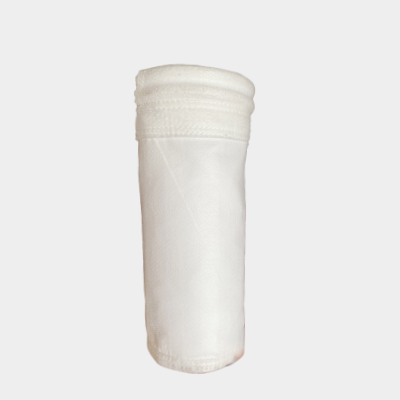
Water- and oil-repellent finishing: Impregnation and coating treatments give the filter media strong hydrophobic and oleophobic properties, preventing moisture and oil from penetrating the fibers and reducing caking risks.
Optimized structure design: Smooth surfaces and uniform fiber spacing minimize the attachment of dust and moisture, maintaining better air permeability.
Challenge 3: Corrosion Resistance
Steel flue gas contains SOx, NOx, HCl, and alkaline substances. Under high-temperature and high-humidity conditions, these form a highly corrosive environment.
Solutions:
Corrosion-resistant materials: PTFE offers outstanding chemical inertness and withstands nearly all acids and bases. Although 100% PTFE filter bags are more costly, they provide the highest reliability in harsh operating conditions.
Conclusion
Under the stringent demands of ultra-low emissions in the steel industry, dust filter bags have evolved far beyond simple fabric bags. They are now high-performance products integrating advanced materials, membrane technology, and precision finishing. With proper media selection, and professional post-treatment, these filter bags ensure stable emission compliance, longer service life, and greater economic benefits for customers.