 Pano de filtro Bolian
According to operating temperature, industrial dust collector filter bags are generally divided into three categories: ambient temperature, medium temperature, and high temperature. Accurate material matching is the foundation for ensuring stable, efficient, and cost-effective operation of dust collection systems. How to select dust collector filter bag materials by temperature?
1. Ambient Temperature Filter Bags (Operating Temperature: ≤130°C)
Core Materials: Poliéster, polipropileno, acrylic, and other synthetic fibers.
Features and Advantages:
Filter bags made from these materials offer excellent air permeability and smooth surfaces, allowing dust cakes to release easily. They also provide good dimensional stability and strong resistance to acids and alkalis under normal temperature conditions, making them a cost-effective solution.
Typical Applications:
This is the most widely used category, suitable for most processes operating at normal temperatures or with minimal temperature fluctuations.
Key Selection Consideration:
Within this temperature range, you should pay special attention to flue gas humidity and chemical corrosion.
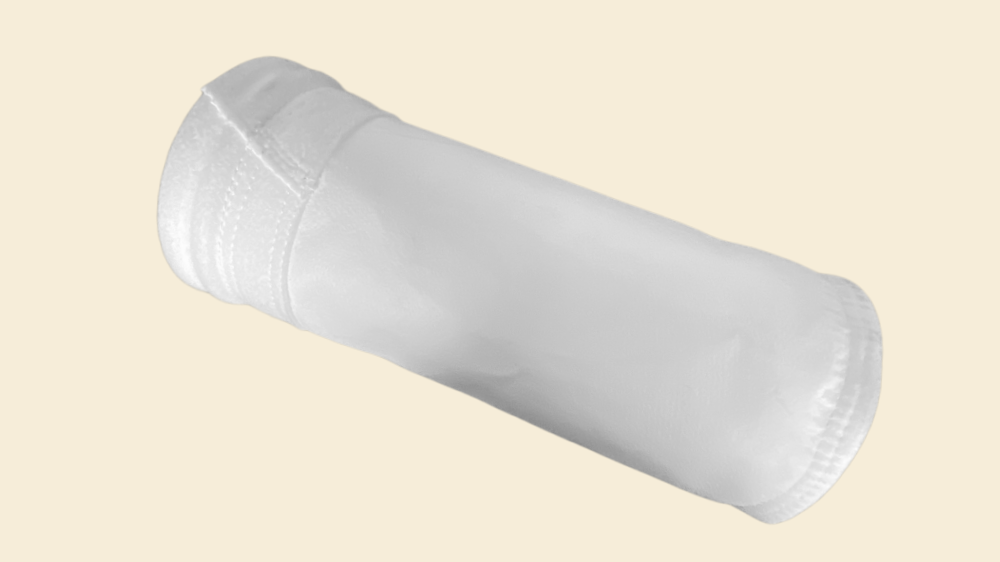
2. Medium Temperature Filter Bags (Operating Temperature: 130°C – 190°C)
Core Materials: Aramid and PPS fibers are the most common choices.
Features and Advantages:
These materials provide higher heat resistance as well as excellent chemical corrosion resistance and hydrolysis resistance. For example, PPS fibers can perform reliably at temperatures up to 190°C and handle acidic environments containing sulfur oxides (SOx), while also offering strong oxidation resistance.
Typical Applications:
Medium-temperature dust collection filter bags are commonly used in coal-fired boilers, waste incineration plants, and thermal power generation systems, where flue gas often contains moderate temperatures and chemical corrosive components.
Key Selection Consideration:
Medium-temperature conditions often involve complex chemical compositions. Therefore, accurate analysis of flue gas composition and fluctuations is essential to ensure material compatibility.
3. High Temperature Filter Bags (Operating Temperature: ≥190°C, up to 260°C–300°C)
Core Materials: P84, fiberglass, PTFE, and PTFE-coated fiberglass.
Features and Advantages:
Fiberglass treated with special processes, such as PTFE membrane, retains its high-temperature resistance while improving flex resistance and corrosion resistance.
Typical Applications:
High-temperature filter bags withstand extreme environments with high temperatures and strong chemical corrosion.
Key Dust Collector Filter Bag Selection Consideration:
In high-temperature applications, temperature fluctuations, peak temperatures, and chemical attack can greatly affect filter bag lifespan. Selecting materials with sufficient temperature safety margins and strong chemical resistance is critical.
Conclusion
Dust collector filter bag selection is essentially about accurately matching operating conditions with material performance. At the same time, while temperature is the primary factor, humidity, chemical composition, dust characteristics, and cleaning methods are also important considerations.
Selecting the correct temperature grade helps avoid risks such as bag embrittlement or burning. It also ensures environmental compliance and improves system stability.