 بوليان مرشح القماش
Fabric tear strength is an important indicator of durability, directly affecting the service life and safety of woven textile products. The following are the key internal factors influencing tear strength.
Firstly, yarn properties are the fundamental factor determining tear performance. Tear strength is approximately proportional to yarn strength and is closely related to the size of the “stress triangle” formed during tearing. The higher the elongation at break and the lower the surface friction coefficient, the larger the stress area formed, allowing more yarns to share the load and significantly improving tear strength. In addition, yarn structure, twist, and surface characteristics affect inter-yarn friction and cohesion, further influencing the overall tear resistance of the fabric.
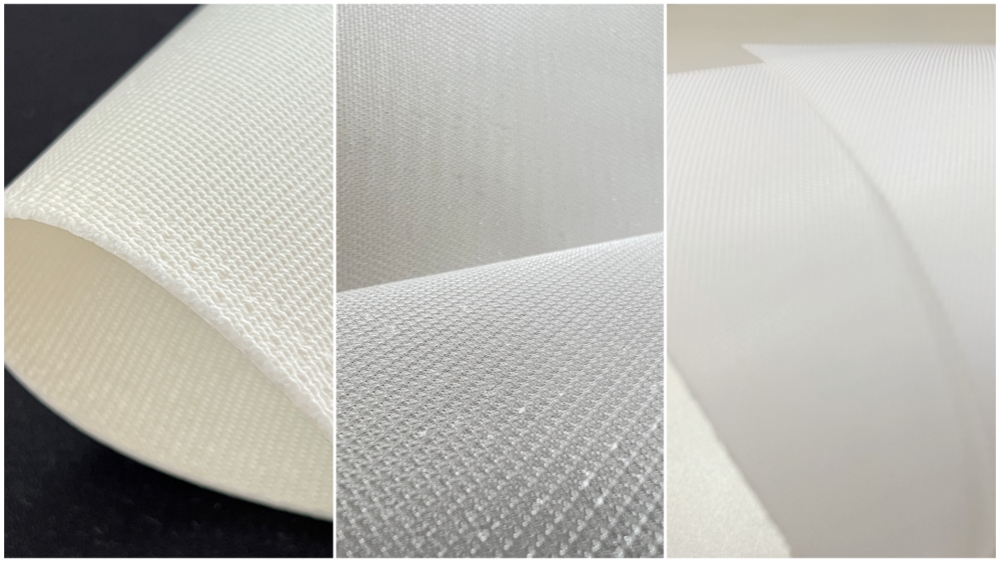
Secondly, fabric structure also has a significant impact. Plain weave has relatively low tear strength. Twill weave has fewer interlacing points and a looser structure. Its tear strength is therefore higher. Satin weave usually exhibits even higher tear strength than twill weave.
Thirdly, fabric weaving shrinkage has a dual effect on tear strength. On one hand, increased weaving shrinkage enhances fabric extensibility and enlarges the stress triangle. It increases the number of load-bearing yarns and improves tear strength. On the other hand, excessive weaving shrinkage increases yarn bending and inter-yarn friction, restricting yarn movement and reducing the stress area, which can negatively affect tear performance. Overall, the positive effect tends to dominate.
Finally, fabric density (warp and weft density) plays a complex role. Within a moderate range, higher density increases the number of yarns sharing the load, thus improving tear strength. However, excessive density raises friction resistance between yarns, limiting their mobility and reducing the stress triangle, which lowers tear strength. In comparison, fabrics with lower density (under the same yarn diameter) tend to form larger stress areas and exhibit better tear resistance.
In conclusion, woven fabric tear strength is the result of multiple internal factors working together. Under actual production conditions, appropriate selection of yarn types, fabric structures, and processing parameters is essential to achieve optimal performance.